Don't Let Your Success Be a One-Off
New Zealand hospitality just made history with the Michelin Guide. But this is the moment that separates the people built for the long haul from the people who aren't. I have three things to ask of our industry.
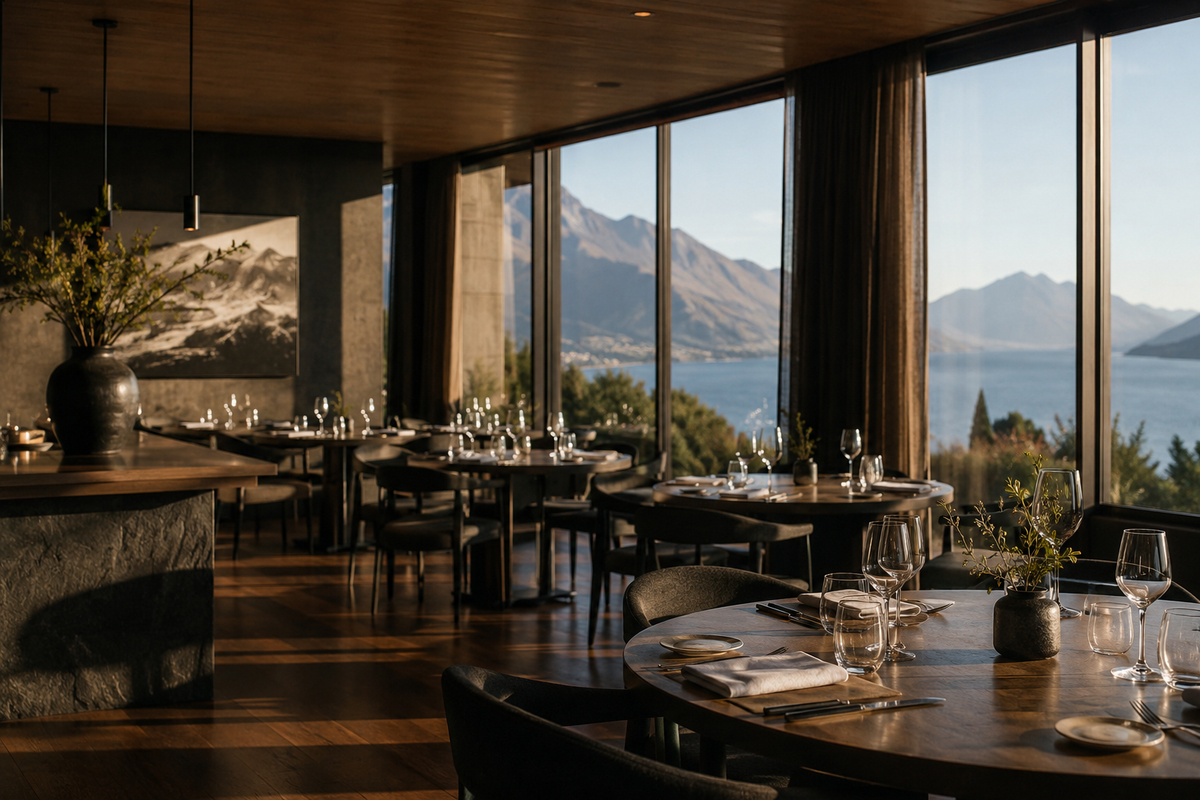
One hundred and ten restaurants. Fourteen one-star. And Essence in Queenstown is the first two-star restaurant Oceania has ever seen.
The Michelin Guide has arrived in New Zealand. It is extraordinary, it is deserved, and everyone in this industry who helped build it should be proud.
Now. What happens next?
Because this is the moment that separates the people who are built for the long haul from the people who aren't. And if you are not thinking about that right now, if you are not asking yourself what the foundation underneath all of this actually looks like, this will be a one-off.
The Michelin Guide didn't create New Zealand's greatness. It recognised it.
The culinary excellence, the luxury experiences, the distinctly Kiwi way of doing things that has been quietly winning people over from all over the world for decades, that was already here.
What the guide does, like any great catalyst, is amplify what is already there. Just like a great leader amplifies the people around them, the guide amplifies the foundation that success was built on.
It turns up the volume.
It says out loud what New Zealand hospitality has been proving for years.
And that means everything, the good and the bad, is now visible faster, at a scale this industry in New Zealand has never had to reckon with before.
So, while the country celebrates, I want to ask three things of our industry.
1 | Don't let it dilute who you are.
Recognition like this pulls you to look outward, at what everyone else is doing, how you keep up, how you stay in the conversation. That instinct isn't a bad thing. It's part of what pushes an industry forward, and it's part of what will keep New Zealand hospitality growing.
But it only works if you have examined and understood who you are first.
What makes you distinct. The values you live and what you stand for. Because those distinctions don't limit the risks you take, the people you bring in, or the directions you choose to go. They shape them. They become the filter through which everything runs.
These restaurants and hotels were recognised for their authenticity, for what they brought, for the experiences they curated. Not for looking like anyone else.
New Zealand has its own beautiful history and culture, and it also has people from all over the world bringing their own ideas and perspectives into it. That blend is a strength. The distance that makes us feel far away is the same distance that has let this industry develop something the rest of the world can't replicate.
So innovate. Level up. Take risks. Bring in new voices and new perspectives.
But do all of it knowing exactly who you are and what you stand for. Because the venues that will still be standing and will still be celebrated in ten years are the ones who grew without forgetting their values and people.
2 | Don't forget the people who helped you get here.
A chef isn't the whole restaurant. A GM doesn't deliver every customer touchpoint. The floor manager wasn't the only one who remembered a customer's name from three visits ago and made them feel like the only person in the room.
Thanking "the team" in a speech is not the same as saying their names. It's not the same as knowing it was your sous chef's split-second call that elevated the dish, or that your hostess remembers every name, dietary need and drink order, whether someone's walked through the door once or a hundred times.
Luckily, this ask is a double-win. It's for your people and your culture. But it's also for your operations and your bottom line. Both matter. You don't know what you actually have to offer if you don't know your people and what each of them uniquely brings. That data is your differentiator. That is your gold mine.
(And, if like many operators, your first reaction is, "I'd love to, but I don't have the time," here's my counter: what are you prioritising over your competitive edge? We can always find time for the things we want to. The question is whether your priorities are in the right place.)
3 | Use this as a chance to evaluate the foundation you're building on.
This is where I want to speak directly to you. Not to the industry, not to the Guide. To you as a participant in this industry.
The standard is higher now, permanently.
That is genuinely exciting, for the industry and for the guests lucky enough to enjoy what comes next. This next chapter will bring more innovation, more resources, more ideas, and more people choosing to come and work here. The Guide is a magnet. And New Zealand just became a lot more magnetic.
But success is one thing. Sustaining it is another.
The Guide can recognise excellence. It can't maintain it.
That's your job.
Once expectations rise, every crack in your culture becomes easier to see. Your leadership. Your systems. Your communication. The way your people feel about coming to work each day. Your guests experience the result of all of it.
The businesses that thrive won't necessarily be the most talented. They'll be the ones with the strongest foundations.
Great service isn't something you switch on when the inspector walks through the door. It's what happens every day when your people know what's expected, feel supported, and can perform without the leader needing to hold everything together.
Leadership isn't a nice-to-have anymore. It's part of the standard. The leaders with a real foundation will do this sustainably, for years, and get better at it. The leaders without one will still do something great once, then burn out, leave, or build a culture so toxic that no one wants to stay. Your reputation can only hold good people for so long if the culture underneath it is toxic.
That is the difference between a great success and a lifetime of successes. Between working yourself to the bone for one moment of greatness, and building something that will outlast you.
Is your goal to win a race, or are you running a marathon?
Don't let success be a one-off.
Kristen Enright has spent 20+ years building and repairing workplace cultures across three continents, from New York boardrooms to New Zealand hospitality. As Director of Culture & Learning at SGEi and Founder of KE Consulting, she helps hospitality leaders build the foundation to sustain excellence instead of burning out chasing it.
Her Leadership Performance Program's next cohort starts July 22.